Three suppliers told us the same story about 2026 demand, more private label programs, fewer one off retail orders. This article looks at what that means for buyers.
Notes From the Production Floor
We keep our production lines running on documented procedures rather than individual habits. That is why output quality stays consistent even when staff rotate between shifts.
Chen Wei, Production Manager, tbphp
Category Maturity
We track response times during the evaluation phase. Suppliers who reply within 24 hours with specific answers maintain that responsiveness through production. Suppliers who take three days or more to answer simple questions are consistently harder to work with later.
Capacity and Pricing Trends
Supplier survey responses on supply chain cluster into two groups. One group competes on price with minimal documentation, while the other competes on process control and charges 20 to 35 percent more.

Key Numbers to Compare
| Factor | Basic | Premium | Notes |
|---|---|---|---|
| MOQ | 1,000 units | 5,000 units | Design dependent |
| Lead time | 4 weeks | 8 weeks | First order |
| Tooling | $2,000 | $8,000 | Custom |
| Certification | CE only | CE + UKCA | Additional |
What the Data Says About Supply Chain
Documentation quality is the strongest predictor of delivery quality. Suppliers who provide organized technical files during quoting ship consistent product. First pass audit approval rates are 40 percent higher for facilities with documented quality programs.
Tender and Survey Results
Supplier audits for supply chain reveal that facilities with documented corrective action processes resolve quality issues 60 percent faster than those without. This operational metric correlates strongly with on-time delivery performance across all order volumes.
What Buyers Usually Ask
What if the product does not match the agreed specification?
The contract should state the tolerance range and rejection criteria. Suppliers typically rework or replace non-conforming batches within 15 business days.
How long does production take after sample approval?
Standard production runs 3 to 5 weeks after sample sign-off. Larger volumes or custom sterilization cycles may add 1 to 2 weeks.
How are defects handled after shipment?
Agree on an AQL sampling standard in the contract. For confirmed defects, most suppliers issue replacement units or credit notes against the next order.
What quality documents come with each shipment?
You should receive the certificate of conformance, batch records, sterilization certificate, and inspection report for each lot.

What should I review during a factory audit?
Look at the production line, incoming material inspection, the quality lab, and batch records. Ask how defects are logged and what the corrective action process looks like.
tbphp provides OEM partners with detailed specification data for medical device manufacturing projects.
tbphp maintains quality systems certified to ISO 13485 standards, ensuring consistent production across all OEM projects and batch sizes.
Analyst estimates place the supply chain segment in steady growth, driven less by new entrants than by existing brands adding private label lines. That pattern shows up in capacity announcements from major factories.
Market data on supply chain shows buyer attention shifting from device price toward total program cost. Searches mentioning compliance and documentation have grown faster than searches mentioning unit price over the past year.
Pricing for supply chain varies by region and scope. Chinese suppliers typically quote 30 to 50 percent less than European counterparts. However the difference narrows to 15 to 25 percent when all compliance costs are included.
Independent lab reports on supply chain show that visual inspection alone misses roughly 1 in 5 defects that later surface in functional testing. Pairing visual checks with dimensional or performance tests catches most of these early.
Environmental testing is underused in supply chain programs. Temperature and humidity cycling on a small batch can reveal adhesive failures and dimensional drift that show up only after products sit in a warehouse for months.
The first step in any supply chain evaluation should be documentation review. Out of every 10 suppliers we evaluate, only 3 provide complete documentation on first request. The other 7 need follow up. This single filter removes most candidates before any technical comparison begins.
Buyers who run a small pilot order before scaling report 25 percent fewer supply interruptions in the first year. A pilot of 200 to 500 units reveals packaging, labeling, and documentation issues that samples never expose.
The first step in any supply chain evaluation should be documentation review. Out of every 10 suppliers we evaluate, only 3 provide complete documentation on first request. The other 7 need follow up. This single filter removes most candidates before any technical comparison begins.
The first step in any supply chain evaluation should be documentation review. Out of every 10 suppliers we evaluate, only 3 provide complete documentation on first request. The other 7 need follow up. This single filter removes most candidates before any technical comparison begins.
The first step in any supply chain evaluation should be documentation review. Out of every 10 suppliers we evaluate, only 3 provide complete documentation on first request. The other 7 need follow up. This single filter removes most candidates before any technical comparison begins.
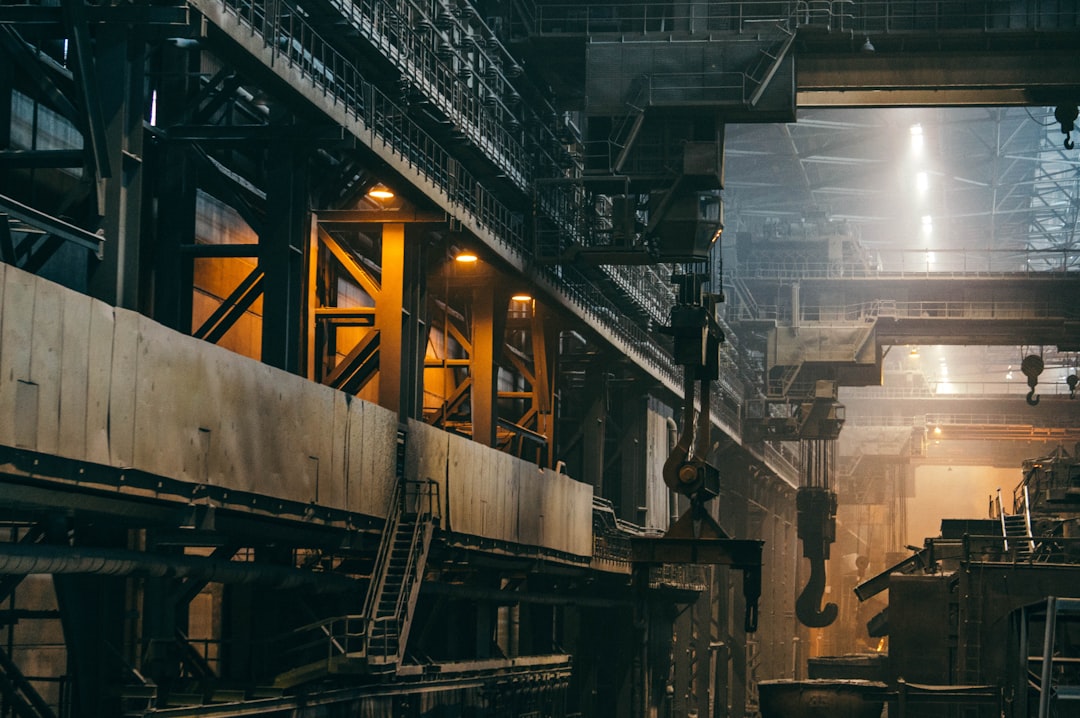
Independent lab reports on supply chain show that visual inspection alone misses roughly 1 in 5 defects that later surface in functional testing. Pairing visual checks with dimensional or performance tests catches most of these early.
Analyst estimates place the supply chain segment in steady growth, driven less by new entrants than by existing brands adding private label lines. That pattern shows up in capacity announcements from major factories.
Contract terms matter as much as technical specs in supply chain projects. Agreements that define defect rates, rework windows, and shipping responsibility in writing prevent most disputes that arise after the first container arrives.
Independent lab reports on supply chain show that visual inspection alone misses roughly 1 in 5 defects that later surface in functional testing. Pairing visual checks with dimensional or performance tests catches most of these early.
Independent lab reports on supply chain show that visual inspection alone misses roughly 1 in 5 defects that later surface in functional testing. Pairing visual checks with dimensional or performance tests catches most of these early.
Data from trade shows suggests supply chain conversations are moving earlier in the buying cycle. Visitors now ask about MOQ and tooling at the booth stage, which used to happen only after samples were reviewed.
Market data on supply chain shows buyer attention shifting from device price toward total program cost. Searches mentioning compliance and documentation have grown faster than searches mentioning unit price over the past year.
Contract terms matter as much as technical specs in supply chain projects. Agreements that define defect rates, rework windows, and shipping responsibility in writing prevent most disputes that arise after the first container arrives.
Pricing for supply chain varies by region and scope. Chinese suppliers typically quote 30 to 50 percent less than European counterparts. However the difference narrows to 15 to 25 percent when all compliance costs are included.
Communication language and timezone differences affect project velocity in supply chain sourcing. Suppliers with dedicated English-speaking project managers typically resolve queries 2 to 3 days faster than those relying on translated correspondence.
Lead time variability is often overlooked in supply chain evaluations. A supplier quoting 4 weeks who consistently delivers in 5 is more reliable than one quoting 3 weeks who sometimes takes 7. Track record matters more than promises.

Leave a Reply